

Best Website Builders for Bloggers 2026
Starting a blog has never been easier. You no longer need to understand HTML, install complicated software, or hire a developer to publish your own website.
Modern website builders allow bloggers to create a professional website, publish articles, add images and videos, build an audience, and even monetize their content.
The important thing is choosing a platform that matches your blogging goals. A personal blogger may need something very different from someone building a professional publication or a content-based business.
In this guide, we'll look at the best website builders for bloggers in 2026 and what you should consider before choosing one.
What Should Bloggers Look for in a Website Builder?
A blog is different from a simple business website because you'll probably be adding new content regularly.
Your website builder should therefore make publishing and organizing articles as easy as possible.
Important features include:
- Easy article publishing
- A simple content editor
- Categories and tags
- Blogging templates
- Custom domain support
- SEO tools
- Image and video support
- Mobile-friendly design
- Social media integration
- Comments or audience interaction
- Analytics
- Newsletter integration
- Ecommerce or other monetization options
It's also worth considering how easy it will be to manage your blog after you've published dozens or hundreds of articles.
Best Website Builders for Bloggers in 2026
Here are some of the strongest options:
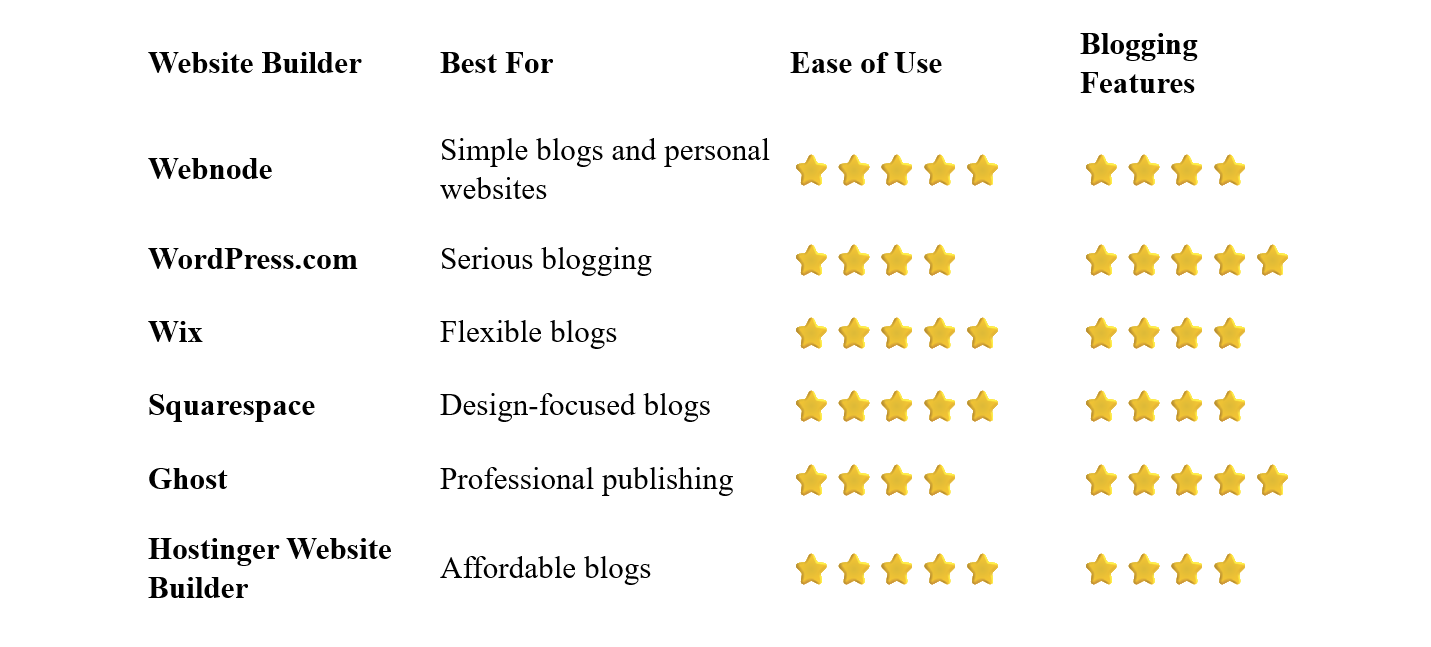
Webnode – Best for Simple Blogs
Webnode is a good choice for bloggers who want an easy way to create a website and start publishing without dealing with complicated technology.
Its visual editor makes it possible to create pages, publish blog posts, add images, and customize the website without coding.
You can combine your blog with other types of content, such as an About page, contact page, portfolio, or services.
Webnode also provides SEO tools, forms, AI-powered website creation, custom domain options, and ecommerce functionality.
Why choose Webnode?
- Easy visual editor
- No coding required
- Built-in blogging
- Professional templates
- SEO tools
- Custom domain options
- Contact forms
- AI website creation tools
- Ecommerce functionality
This can make Webnode particularly appealing if your blog is part of a broader personal website.
For example, a travel blogger could combine articles with travel guides, photographs, an About page, and a contact page.
Best for: Personal bloggers, hobby bloggers, freelancers, and creators who want a simple website with a built-in blog.
WordPress.com – Best for Serious Bloggers
WordPress.com is one of the most established platforms for publishing online content.
It provides extensive blogging functionality and can be a strong choice for people who expect their blog to become a major part of their online presence.
You can organize content into categories, create extensive archives, publish different types of content, and expand the website as your audience grows.
WordPress.com is also particularly well suited to content-heavy websites.
The trade-off is that it can take more time to learn than a simpler website builder.
Best for: Bloggers who plan to publish frequently and build a substantial content website.
Wix – Best for Flexible Blogs
Wix combines a beginner-friendly visual editor with blogging and broader website functionality.
You can create blog posts, categories, author profiles, media-rich articles, and other website pages.
The platform is particularly useful if your blog is only one part of a larger website.
For example, a food blogger could combine recipes and articles with an online store, newsletter, portfolio, or business services.
Best for: Bloggers who want a flexible website that combines blogging with other features.
Squarespace – Best for Design-Focused Blogs
Squarespace is well known for its visual presentation and professionally designed templates.
This makes it attractive for bloggers who want their articles to be presented within a polished overall website.
It can work particularly well for:
- Travel blogs
- Food blogs
- Fashion blogs
- Photography blogs
- Lifestyle blogs
- Personal brands
You can combine blog posts with galleries, portfolios, newsletters, ecommerce, and other content.
Best for: Bloggers who prioritize design and visual presentation.
Ghost – Best for Professional Publishing
Ghost is built specifically around publishing and membership-based content.
It provides tools for blogging, newsletters, memberships, and paid subscriptions.
This makes it particularly interesting for bloggers who want to turn their content into a business.
For example, you could publish free articles while offering premium content to paying subscribers.
Ghost is more specialized than general-purpose website builders, so it may not be the best choice for someone who simply wants a small personal blog.
Best for: Professional bloggers, writers, publishers, and subscription-based publications.
Hostinger Website Builder – Best Affordable Option
Hostinger combines website building, hosting, templates, and AI-powered tools.
It can be a practical choice for beginners who want to start a blog without a large initial investment.
The visual editor makes it relatively easy to build the website, add pages, publish content, and customize the design.
Best for: New bloggers, hobby bloggers, and creators looking for an affordable way to start.
What Type of Blog Are You Creating?
Before choosing a website builder, think about what kind of blog you want to build.
Personal Blog
A personal blog might cover your experiences, interests, hobbies, travel, or everyday life.
Simplicity is often more important than advanced publishing features.
Professional Blog
A professional blog is usually built around a particular area of expertise.
For example:
- Marketing
- Finance
- Technology
- Photography
- Fitness
- Business
- Education
SEO, content organization, and analytics become more important in this case.
Business Blog
A company blog can support an existing business by attracting potential customers through useful content.
It might include:
- Guides
- Tutorials
- Industry news
- Case studies
- Frequently asked questions
Niche Blog
Niche blogs focus on a specific subject.
Examples include:
- Coffee
- Hiking
- Gardening
- Gaming
- Cooking
- Home improvement
A focused niche can make it easier to develop a recognizable audience.
Professional Publication
If you plan to publish content frequently and build a large audience, you may need more advanced publishing and monetization features.
Platforms such as WordPress.com or Ghost may be worth considering.
How Can Bloggers Make Money?
One of the biggest advantages of building your own blog is that you can develop multiple income streams.
Affiliate Marketing
You can recommend products or services and earn a commission when readers make qualifying purchases.
This can work particularly well for blogs based on product research and recommendations.
Advertising
Established blogs can generate revenue by displaying advertisements.
However, advertising usually becomes more meaningful once you have significant traffic.
Sponsored Content
Companies may pay for sponsored articles, reviews, or other promotional content.
It's important to clearly distinguish sponsored content from independent editorial recommendations.
Digital Products
Bloggers can sell:
- Ebooks
- Courses
- Templates
- Presets
- Guides
- Printables
Services
Your blog can also generate leads for your own services.
For example, a marketing blogger might offer consulting, while a photographer might use a blog to attract photography clients.
Memberships
Some bloggers create premium sections with exclusive articles, guides, communities, or other content.
SEO can be one of the most important traffic sources for a blog.
Search engines can continue sending visitors to useful articles long after you publish them.
Start with the basics:
- Research topics people actually search for
- Use descriptive titles
- Create useful, original content
- Use clear headings
- Optimize images
- Link related articles together
- Use descriptive URLs
- Make your website mobile-friendly
- Improve page speed
Write for Specific Search Intent
Instead of trying to write about everything, focus on specific questions and topics relevant to your audience.
For example, instead of a generic article about photography, you could create:
Best Cameras for Beginner Photographers
or
How to Take Better Portrait Photos
Specific topics can make it easier to create useful content that matches what readers are searching for.
Build Topic Clusters
As your blog grows, create groups of related articles.
For example, a gardening blog could have a main guide about growing tomatoes supported by articles about:
- Best soil for tomatoes
- How often to water tomatoes
- When to plant tomatoes
- Tomato plant diseases
- Best tomato varieties
Linking related articles together makes your website easier to navigate and helps search engines understand the relationship between your content.
How to Build a Blog
1. Choose Your Topic
Pick a subject that you know, enjoy, or are willing to research extensively.
2. Define Your Audience
Think about who you want to read your content.
A clearly defined audience makes it easier to decide what to publish.
Select a platform based on your publishing needs, technical skills, and future plans.
Pick a domain that's easy to remember and relevant to your blog or brand.
Your content should be easy to read.
Avoid designs that make articles difficult to navigate.
6. Create Essential Pages
Consider starting with:
- Home
- Blog
- About
- Contact
- Privacy Policy
Add other pages as your website develops.
7. Publish Your First Articles
Focus on useful content rather than publishing as many articles as possible.
8. Create a Publishing Strategy
You don't necessarily need to publish every day.
A consistent schedule that you can maintain is more important.
Share your articles through relevant social networks, communities, newsletters, and other channels.
10. Analyze Your Results
Use analytics and search performance data to understand which topics attract visitors and which articles could be improved.
Common Blogging Mistakes
Choosing a Topic That's Too Broad
A blog about "everything" can be difficult to differentiate.
A more focused topic often gives you a clearer audience.
Publishing Without Understanding Your Audience
Before writing an article, think about what the reader actually wants to learn.
Focusing Only on Quantity
Publishing 100 mediocre articles is not necessarily better than publishing 30 genuinely useful ones.
Ignoring Internal Links
As your blog grows, connect related articles to help readers discover more of your content.
Choosing a Complicated Platform
If technology gets in the way of writing, you may become frustrated and stop publishing.
Choose a platform you feel comfortable managing.
Giving Up Too Quickly
A new blog may take time to attract significant traffic.
Building a useful library of content is a long-term process.
Which Website Builder Is Best for Bloggers?
The right platform depends largely on your ambitions.
Webnode is an excellent option if you want a simple and intuitive way to create a website with a built-in blog without coding.
WordPress.com is particularly well suited to bloggers who expect publishing to become the main focus of their website.
Wix is a strong choice if your blog will be part of a larger website with additional features.
Squarespace is attractive for bloggers who care strongly about design and visual presentation.
Ghost is worth considering for professional publishers and bloggers who want memberships or paid subscriptions.
Hostinger Website Builder can be a practical option for beginners looking for an affordable way to start.
Final Thoughts
The best blogging platform is not necessarily the one with the most features. It's the one that makes it easy for you to publish useful content consistently.
If you want a simple website that combines blogging with pages such as About, Contact, Portfolio, or Services, Webnode can be a particularly convenient option. Its visual editor lets you manage the website without coding and gives you the flexibility to expand beyond the blog as your project grows.
If blogging itself is going to be the core of your business, WordPress.com or Ghost may offer more specialized publishing capabilities.
Start with a clear topic, understand your audience, publish genuinely useful content, and build your blog gradually. A well-organized website with valuable articles can become a powerful long-term source of traffic and income.
⭐ Popular Guides ⭐
Looking for inspiration for your next website? Explore our popular guides for ideas and recommendations for different types of websites and online projects.


